States such as Tennessee, Florida, and Texas that do not levy an income tax are not low-tax for everyone. Instead they are only low-tax for the wealthy, while low-and-moderate income earners pay a higher share of their income in state and local taxes as compared to Missouri and most other states. That’s because most states replace lost income tax revenue by raising other taxes (usually sales & excise taxes) that are a much higher share of income for most families.
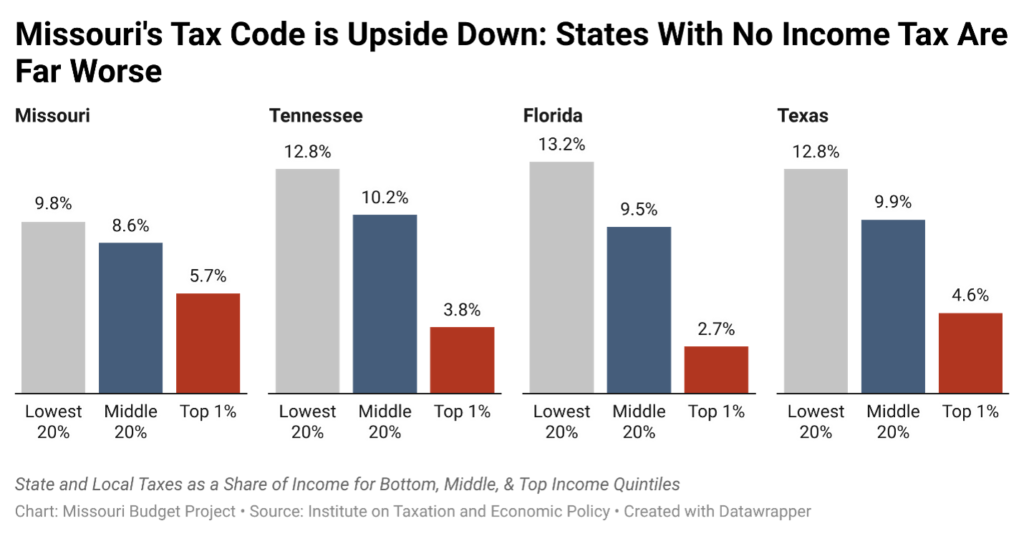
Comparisons to states that do not levy an income tax are often comparing apples to oranges.
Each state economy is driven by unique conditions that don’t always translate to Missouri. States without income taxes are often able to tap into additional revenue streams, such taxes on natural resource production or sales taxes levied primarily on out-of-state visitors.
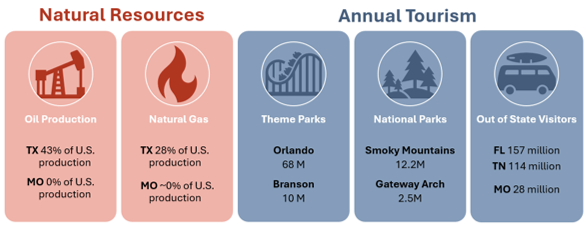
• Texas is by far the leading producer of both oil and gas in the nation.
• Florida’s Disneyworld is the world’s most visited theme park in the world while Tennesee’s Great Smoky Mountain National Park is the most visited national park in the nation.
Sustainable economic growth is driven by real improvements in the lives of everyday Missourians, not tax cuts for millionaires.
Over the past decade, Missouri has passed tax cuts that cost the state $3.8 billion each year. If tax cuts were the key to economic prosperity, Missouri would already be seeing the benefits. But real economic prosperity is complicated and driven by a range of factors.
Missouri’s economic climate is already very competitive compared to states without income tax.
• Last year, Missouri gained over 10,000 businesses, while all no income-tax states except Washington gained fewer or lost businesses. Tennessee lost nearly 10,000 businesses and Florida lost 18,792 businesses.
• Missouri currently has a lower cost of living than all no-income tax states.
Shifting to a greatly expanded sales tax base would dramatically increase daily costs for Missourians and dampen consumer spending in communities across the state.
• This would have ripple effects on Missouri’s economy.
• Missourians may be tempted to cross state lines or travel to big box stores for many purchases, devastating small local businesses and communities.
Eliminating the income tax would limit Missouri’s ability to invest in the very services and infrastructure that grow our economy.
• Even if lawmakers expand the existing sales tax to ALL services, the revenue generated would fall far short of making up for the loss of income tax.
• State investments in quality K-12 and higher education, affordable care for children and aging parents, and access to health coverage are key drivers of economic growth and critical components in attracting and retaining a skilled workforce and quality employers.