Missourians want to live in a prosperous state with opportunities for everyone. Voters recognize that workers are the engines of our economy and have voted to increase the minimum wage and expand Medicaid health insurance. As a result of these policies, and Missouri’s low cost of living relative to other states, Missouri is one of the most affordable states for working people to build their lives and provide for their families. However, unpredictable costs make it harder for families to budget for necessities. Economic policies centering financial stability and affordability can create opportunities for Missouri families to thrive.
In early 2026, Missouri had the 7th lowest overall cost of living in the country. Major expense categories including grocery, housing, utilities, transportation, and health were lower than the US average.
National Trends and People Driving Democracy Have Pushed Wages Up
Missouri’s real median wage, the median wage adjusted for inflation, has been growing since 2022. In 2025, the growth rate surpassed both the U.S. real median wage’s growth rate and the inflation rate of about 3%. The real wage growing faster than inflation means that wages were increasing faster than prices. This put more purchasing power in the pockets of Missourians.
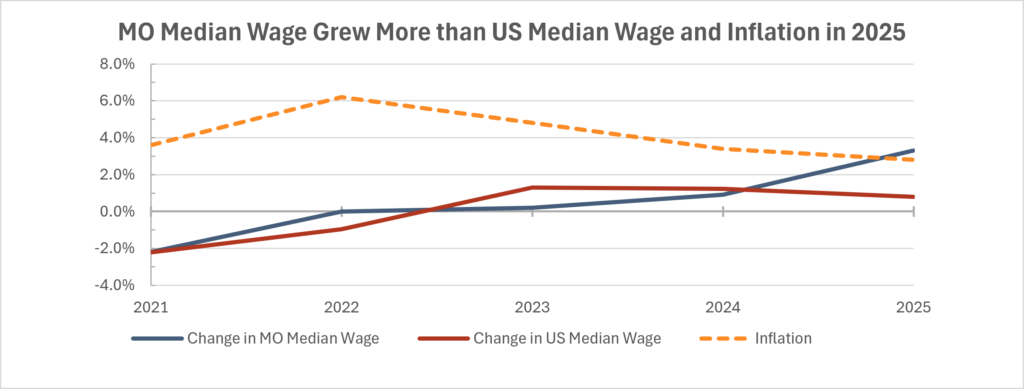
Multiple factors created this upward pressure on wages, including:
– Unique post-pandemic economic conditions led to a surge in wages for low-wage workers, especially impacting parents and historically disadvantaged groups like women, Black and Hispanic workers, and young workers;
– Missourians voted to increase the minimum wage from $12 to $15 an hour, raising wages for over 560,000 Missouri workers .
When Missourians have access to the ballot and people drive our democracy, workers create opportunities to best support their families and grow the economy.
Unpredictable Prices and State & Federal Policies Create Financial Headwinds
While wages have been consistently rising in Missouri, the federal economic landscape has been erratic. Fluctuations in inflation this year have ranged from a healthy 2.4% in January to a high of 4.2% in May, higher than Missouri wage increases have ever been. With new unpredictable federal policies affecting the economy through international politics and tariffs, pre-pandemic trends of prices increasing while wages stagnate may reappear.
Other factors putting a higher cost burden on families include:
– Despite recent increases, the minimum wage is still below a living wage for Missouri families with two working adults and one child;
– State lawmakers recently eliminated annual minimum wage inflation adjustments that had been in place for nearly two decades and repealed paid sick leave legislation that Missourians had voted into law, removing opportunities for stability in tough times; and
– Unprecedented federal cuts to funding and eligibility for SNAP and Medicaid are projected to cause over 170,000 Missourians to lose healthcare and 58,000 to lose food assistance.
When low-wage workers need to pay more out-of-pocket for necessities like food and healthcare, it makes it harder for families to thrive.
We Can Create a Missouri Where All Workers and Their Families Will Thrive
Missouri voters have repeatedly shown support for policies that bolster financial stability for Missouri families. It’s time for Missouri politicians to listen.
People drive the economy, and when the people drive the agenda, we see state policies that foster well-being and economic stability in all our communities. Through their voices, we can create an economy where everyone can thrive.