In FY2026, Missouri’s general revenue collections fell to $13.05 billion – that’s nearly $380 million (-2.8%) lower than FY2025 collections.
This was below the Consensus Revenue Estimate (CRE) of $13.15 which was revised downward to account for lower than expected revenue due to Missouri’s elimination of the capital gains tax and exacerbated by recent federal tax cuts that reduce Missouri income and corporate tax collections.
While national trends suggest state general revenue collections are on track to show average growth of 2.2%, Missouri revenue collections are falling behind what is needed to maintain current services.
Income Tax Collections Fell by 1.7%. Income tax cuts passed over the past decade relied on triggers, but are now finally nearing full implementation. While the impact of these cuts was initially masked by unusually strong revenue collections tied to unique post-pandemic economic conditions, we are now beginning to see the real impact.
Corporate Tax Collections Fell by 24%. H.R. 1 (also know as the One Big Beautiful Bill Act) provided several tax breaks for corporations that in many cases automatically apply to Missouri tax code. While this decline was expected, the size of this drop in Missouri is far higher than most states which are expected to decline 4.4% on average.
While general revenue collections for FY2026 are on track to exceed original estimates in most states, driven in large part by stronger than expected personal income tax collections, Missouri is one of only 11 states that revised initial estimates downward.
The impact of Missouri’s tax cuts was masked by historic, nationwide increases in general revenue collections – but now we’re paying the price.
Following the COVID pandemic, several economic trends converged that together led to a surge in state general revenue collections across the nation. Federal stimulus bills led to unusually high levels of consumer spending and strong employment growth. Rapid inflation led to higher cost of goods which spurred employers across the nation to increase wages. When spending and wages increase, so do sales & income tax collections.
– FY2021 and FY2022 were the two fastest growing years on record for state general revenue collections – and collections have remained elevated even as that surge slows.
– Average general revenue across ALL STATES in FY 2027 will exceed FY2019 levels by 50% – by comparison Missouri’s growth during that same period was 43%.
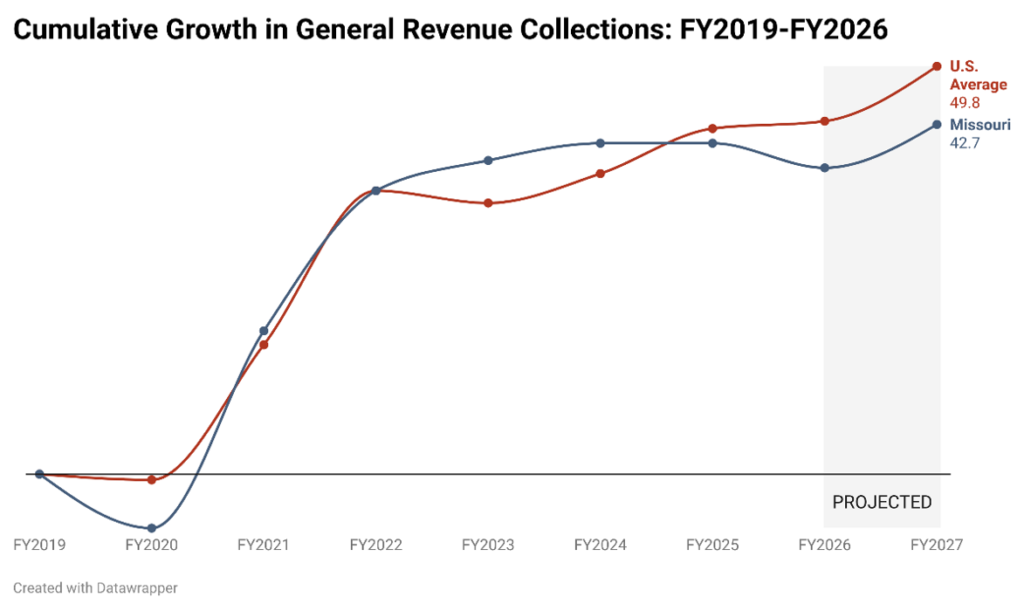
This unusual bump in tax collections masked the impact of Missouri’s cuts to the top income tax rate from 6% to 4.7%. The first substantial cut to the income tax rate was effective in Tax Year 2019, but because the COVID19 pandemic delayed the IRS filing deadline these taxes were still being collected in FY21[i] – meaning the initial impact of cuts to the top income tax rate coincided with an unprecedented nationwide surge in tax collections.
– During this period of growth, lawmakers doubled down on income tax cuts by passing legislation that accelerated the implementation of income tax cuts and eliminated taxes on capital gains.
– As these new tax cuts were implemented (largely in FY2023 and later), Missouri’s general revenue collections flatlined and began to decline.
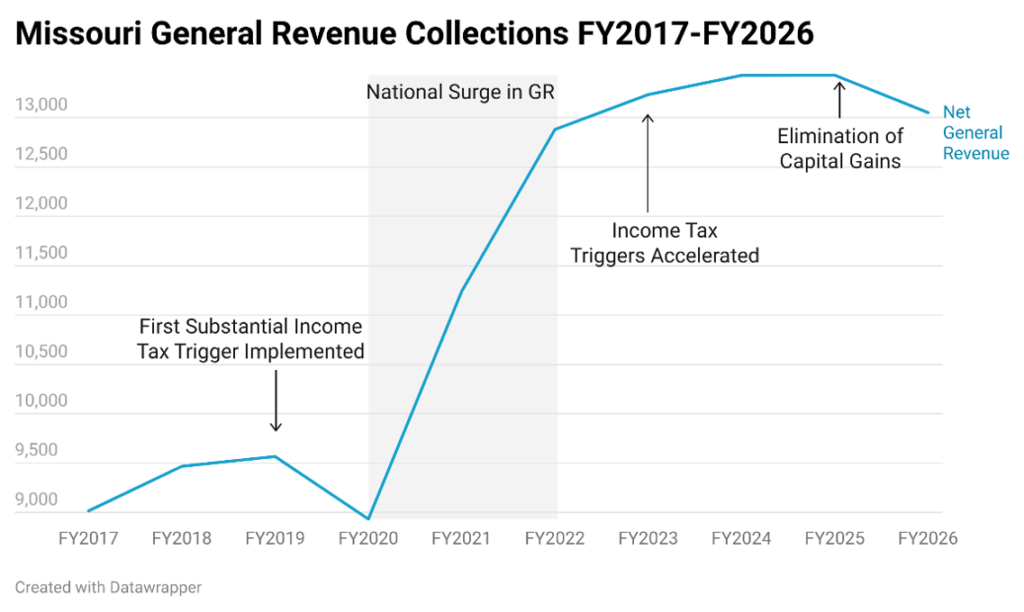
[i] The impact of tax changes on general revenue are delayed by one year. That is because taxes for a specific calendar year are not actually filed and collected until the following fiscal year. For example, income taxes for tax year 2019 would normally have been collected in FY2020 – but the extension of the IRS filing deadline meant the collections for tax year 2019 continued into FY2021.